What a buyer's attorney does when an oil tank turns up
Two things have to hold for a listed sale to reach closing: the buyer's nerve and the buyer's lender. A buried oil tank has a habit of taking out both.
The buyer imagines a worst case, because nobody has given them a better one. The lender sees an environmental question against the property it is about to secure a mortgage on and wants it resolved before funding. Either one alone ends the contract, and the house goes back on the Bay Shore market with more days on it and a story attached to the oil tank.
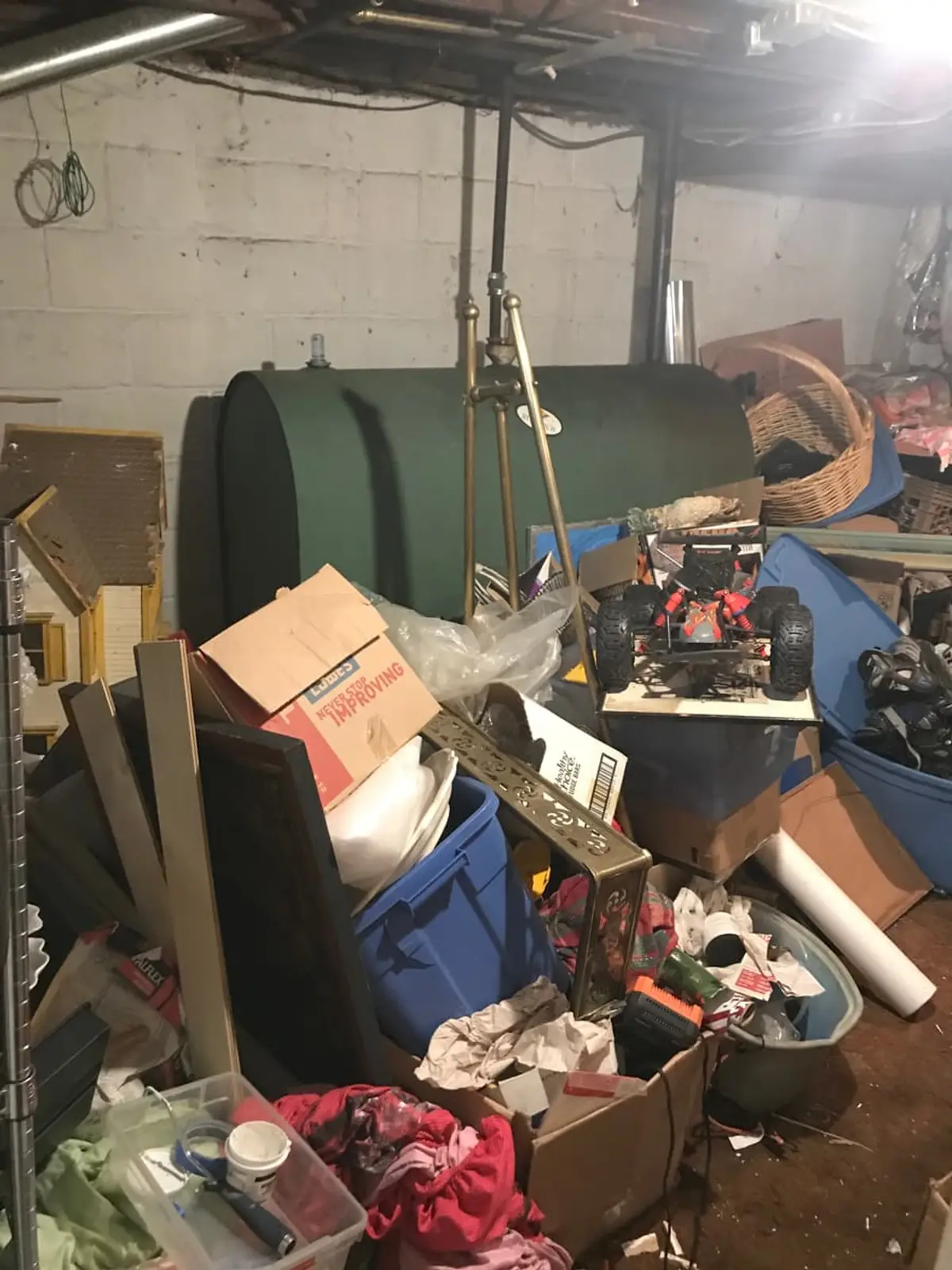
How we help Bay Shore owners with a buried oil tank
We buy houses with buried oil tanks regularly, which means we already know who does this work properly and roughly what it runs. That is the practical difference between us and a buyer meeting the problem for the first time.
We have environmental contractors and tank companies we have used for years, and we bring them in on our own account after closing rather than asking you to line anything up first. You do not test, you do not excavate, you do not chase a decades-old permit. And if it turns out you would come out ahead removing the oil tank and listing the house on the open market, we will say so and hand you the contractor we would call ourselves.
Why local knowledge changes the number
A four-bedroom on Gardiner Drive. A four-bedroom on Brentwood Road. A three-bedroom on Nugent Avenue. All of them in Bay Shore, all bought by us.
Bay Shore is roughly 29,244 people in Suffolk County, ZIP 11706, and the housing stock is mostly cape cod, colonial, victorian. Around Main Street and Bay Shore Marina, most of it is old enough that the mechanicals are on their second or third life. The Bay Shore stop pulls buyers who commute, which supports the good houses and does very little for the ones that need a roof. We know which of these streets take water, where the older systems fail first, and what the Bay Shore Union Free School District does to a resale price.
Why removing the oil tank first is the expensive order
The order people usually reach for is: remove the oil tank, then sell. It is the natural instinct and it is frequently the costly one.
Once the excavator is on site and the tank is out, whatever the ground shows becomes yours to deal with, mid-sale, with a buyer waiting. Sellers who go that route sometimes watch the job double while they are standing in the yard. Selling with the oil tank in place moves that risk to us, which is most of the reason to do it this way.
If the oil tank leaked, this is still a sale
Signs that an oil tank leaked are sometimes obvious and sometimes not. A smell in the basement after heavy rain, staining, a neighbor who remembers work being done. Often there is nothing at all to see.
If you suspect it leaked, an environmental contractor is the person who can actually answer that, and there are reporting considerations in New York your attorney should walk you through. We are not asking you to resolve any of it before selling. We are telling you what the road looks like so you can decide with your eyes open.
What the two paths cost in Bay Shore
These are the two routes open to you with a house with a buried oil tank, priced against what Bay Shore houses actually sell for.
Work it against Bay Shore's own numbers. The median sale here is $650,000. A 5% commission on that is $32,500, and seller closing costs of about 2% add roughly $13,000. Those are costs we can cover on our side. That is $45,500 gone before anyone counts the repairs it took to get the house listable.
There are two waits in a listed sale and people usually only count the first. In Bay Shore the median house takes about 32 days to go from listed to a signed contract. Then it waits again, typically 45 to 60 days, while the buyer's lender orders an appraisal and underwrites the loan. Call it 77 to 92 days from sign to keys, assuming nothing goes wrong.
The part worth understanding is what a signed contract actually guarantees, which is less than most sellers assume. A retail buyer with a mortgage contingency can walk away right up to the end. If they do not qualify, if the appraisal comes in under the price, if they change their mind and let the financing lapse. A share of deals die exactly there, after months of waiting, and the house goes back on the market with time on it. We are not borrowing anything, so there is no lender to satisfy, no appraisal to come in low and no contingency to exercise.
| Listing with an agent | Selling to us | |
|---|---|---|
| Sale price | $650,000 (Bay Shore median) | Our written offer |
| Commission | −$32,500 | None |
| Seller closing costs | −$13,000 | We can cover them |
| Repairs before listing | Out of pocket | None |
| Cleanout | Yours | Ours |
| Showings | Until it sells | One visit |
| Listed to signed contract | 32 days (Bay Shore median, once listable) | 24 hours to a written offer |
| Contract to closing | 45 to 60 days (waiting on the buyer's lender) | A date you choose |
| Total wait | 77 to 92 days if nothing falls through | Yours to set |
| Can the buyer walk? | Yes (mortgage contingency runs to the end) | No financing to fall through |
| Before repairs and carrying | $604,500 | The number we put in writing |
The agent column uses a 5% commission and about 2% of seller closing costs, which are typical rather than fixed. It leaves out repairs and holding costs because no two houses are alike there. Where a house is in good condition, listing with a capable agent can beat our number, and we will be upfront if that is the case.
Closing on a Bay Shore house with the oil tank in the ground
A listed sale with an oil tank in the picture acquires a second schedule of its own. The test gets booked, the results come back, the attorneys argue about what they mean, and if anything is found the negotiation restarts from the beginning.
With us it is one visit and a written number. The oil tank does not add a week, because we are not asking anyone's permission to buy a Bay Shore house that has one. You pick the closing date and we work to it.
What you do not pay when you sell a house with a buried oil tank
Every line below is a cost of listing a house with a buried oil tank the retail way that simply does not arise here.
- Agent commission
- $32,500 at 5% of the Bay Shore median none
- Seller closing costs
- About $13,000 on a $650,000 sale. We can cover these. none
- Repairs to make it listable
- The work it needs to show well, out of your pocket first none
- Cleanout and removal
- Charged by the truckload, and done before the first showing none
- Carrying costs while it waits
- Taxes, insurance and utilities for the 77 to 92 days of finding a buyer and waiting on their mortgage none
Oil tank disclosure, paperwork, and who to ask
If there is paperwork anywhere, it helps. An old permit, a receipt from whoever did the conversion to gas, a note from a prior closing, anything a previous owner left in a drawer. Your town's building department may hold records of work done at the address, and it costs nothing to ask them.
If there is nothing at all, that is the usual case with a buried oil tank and it does not slow us down. We have bought plenty of Bay Shore houses where the only evidence of the tank was a capped fill pipe beside the side door.
Common questions
Do I have to remove the oil tank before you buy a Bay Shore house?
No. We buy with the oil tank in the ground. Removal is our cost and our project after closing, not something you arrange first.
How do I know whether there is still an oil tank buried in my yard?
Houses built in the oil era and later converted to gas are the usual candidates. If you are not sure, we can tell a good deal from a walk around the property, and a sweep by a tank contractor answers it either way.
What if the oil tank leaked?
Then the job is bigger, because the soil is involved as well as the steel. It changes our number rather than our willingness. We have bought houses in exactly that situation and closed them.
A buyer walked away over the oil tank. Does that hurt my chances with you?
No. Most Bay Shore owners who call us about a buried oil tank have already had a contract die on it. That is the usual route here, not a mark against the property.
Does the oil tank change what you can pay?
It affects the number the way any real cost does, because the removal and whatever the ground needs have to be paid for by somebody. What it does not do is end the conversation.