Unpermitted work is ordinary in older Bay Shore houses
You may not know which parts are the problem, and that is common. Owners who bought years ago inherited whatever the previous owner built and had no reason to go looking.
A certificate of occupancy describes the house the town believes it approved. If the basement, the deck or the extension is not in that description, the work was very likely done without a permit. An expeditor or an attorney can pull the file and tell you where the gaps actually are.
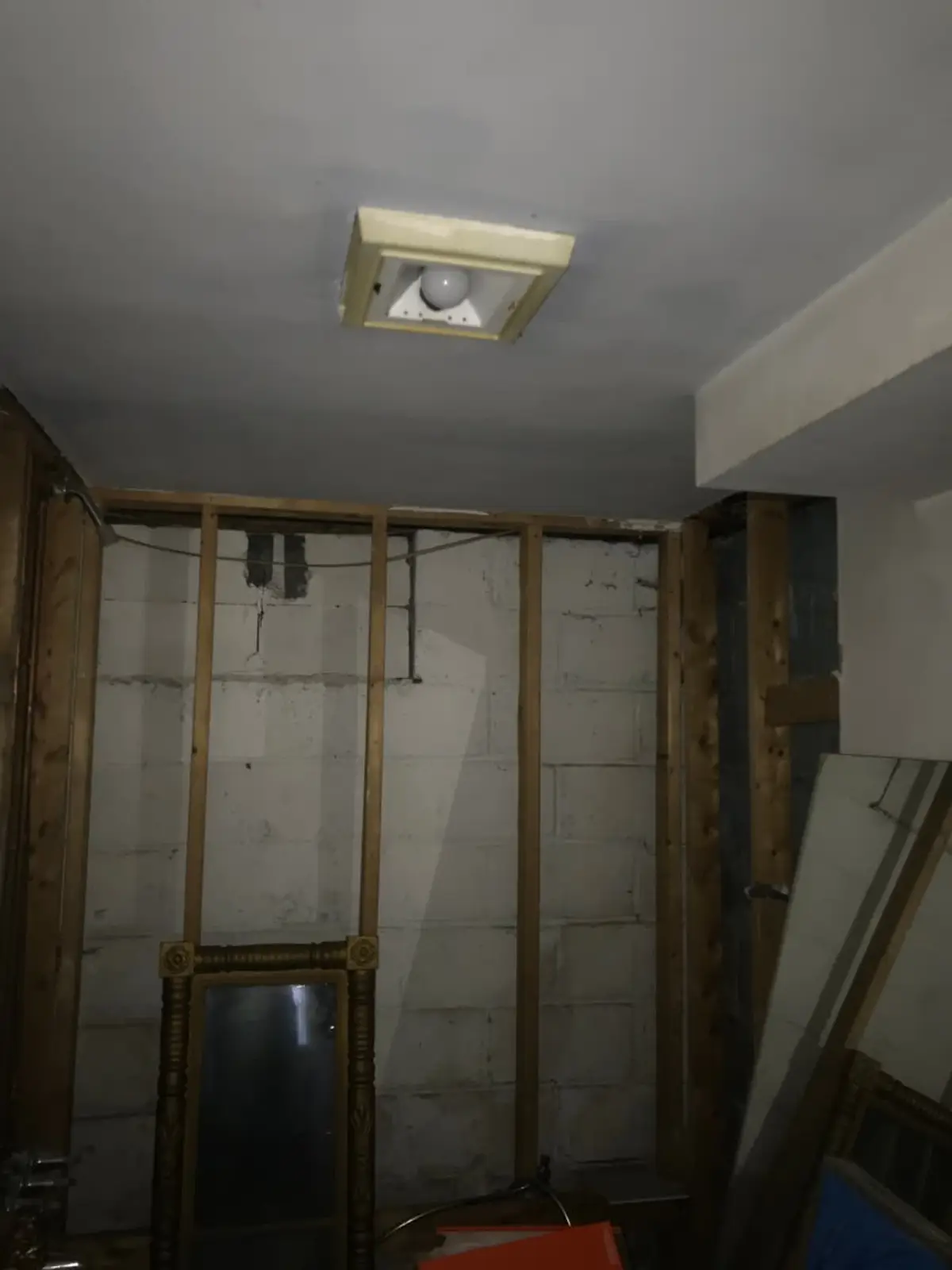
What we bring to unpermitted work, beyond the money
Most owners get here after one call to the building department that raised more questions than it answered. What we can offer first is somebody who has been through this repeatedly telling you plainly what your options are.
If selling suits you, we buy with the unpermitted work in place. If the addition could be legalized without much trouble and the house would net more legalized and listed, we will say so and give you the name of an expeditor. Neither conversation costs you anything.
What this looks like in Bay Shore specifically
Bay Shore is roughly 29,244 people in Suffolk County, ZIP 11706, and the housing stock is mostly cape cod, colonial, victorian. Around Main Street and Bay Shore Marina, most of it is old enough that the mechanicals are on their second or third life. The Bay Shore stop pulls buyers who commute, which supports the good houses and does very little for the ones that need a roof. We know which of these streets take water, where the older systems fail first, and what the Bay Shore Union Free School District does to a resale price.
The Bay Shore median has barely moved year over year as of 2026-05, at 3.17%. Flat is the hardest market to price a fixer into, because there is no upward drift to cover a mistake and no urgency pushing buyers to overlook a problem. At a $650,000 median, Bay Shore is a market where buyers expect to do some work. That helps a seller with a dated house and hurts one with a genuinely broken one, because the pool that will take on a project is not the same pool that will take on a gut. The median house here goes under contract in about 32 days, which is quick for Long Island. It is also a figure that only applies to property in showable condition.
Appraisals, unpermitted square footage and the certificate of occupancy
The awkward part is how late it surfaces. Everything feels fine until a search comes back and the deck, the basement or the extra bathroom is not on file anywhere and no permit was ever pulled.
By then there is a signed contract, a mortgage commitment with conditions attached, and a buyer who has started packing. Renegotiation follows, then often a collapse, and a Bay Shore house goes back on the market with more days on it and a story attached.
Why legalizing unpermitted work takes longer than anyone expects
The construction itself can be the smallest part. Drawings have to be produced, an application filed, fees paid, and inspectors given access to things that are now behind finished walls, which sometimes means opening them up again.
Then there are the outcomes nobody plans for: a structure standing where nothing is allowed to stand, or a conversion the zoning will not allow at all. Legalizing unpermitted work can end in a variance application, and that is a timeline of its own entirely.
What the two paths cost in Bay Shore
These are the two routes open to you with a house with unpermitted work, priced against what Bay Shore houses actually sell for.
Work it against Bay Shore's own numbers. The median sale here is $650,000. A 5% commission on that is $32,500, and seller closing costs of about 2% add roughly $13,000. Those are costs we can cover on our side. That is $45,500 gone before anyone counts the repairs it took to get the house listable.
There are two waits in a listed sale and people usually only count the first. In Bay Shore the median house takes about 32 days to go from listed to a signed contract. Then it waits again, typically 45 to 60 days, while the buyer's lender orders an appraisal and underwrites the loan. Call it 77 to 92 days from sign to keys, assuming nothing goes wrong.
The part worth understanding is what a signed contract actually guarantees, which is less than most sellers assume. A retail buyer with a mortgage contingency can walk away right up to the end. If they do not qualify, if the appraisal comes in under the price, if they change their mind and let the financing lapse. A share of deals die exactly there, after months of waiting, and the house goes back on the market with time on it. We are not borrowing anything, so there is no lender to satisfy, no appraisal to come in low and no contingency to exercise.
| Listing with an agent | Selling to us | |
|---|---|---|
| Sale price | $650,000 (Bay Shore median) | Our written offer |
| Commission | −$32,500 | None |
| Seller closing costs | −$13,000 | We can cover them |
| Repairs before listing | Out of pocket | None |
| Cleanout | Yours | Ours |
| Showings | Until it sells | One visit |
| Listed to signed contract | 32 days (Bay Shore median, once listable) | 24 hours to a written offer |
| Contract to closing | 45 to 60 days (waiting on the buyer's lender) | A date you choose |
| Total wait | 77 to 92 days if nothing falls through | Yours to set |
| Can the buyer walk? | Yes (mortgage contingency runs to the end) | No financing to fall through |
| Before repairs and carrying | $604,500 | The number we put in writing |
The listing column assumes a 5% commission and seller closing costs of about 2%. Both vary. We have not subtracted repairs or the cost of carrying the house while it sits, because those depend on the property. A house in good condition listed with a good agent can absolutely beat a cash offer, and we will say so if that is your situation.
Legalizing the unpermitted work first, or selling as-is
The comparison worth making is not our offer against an asking price. It is money in hand on a date you choose, set against a listed number minus commission, minus whatever the permit process costs, minus the concessions a buyer asks for once the file comes back, and minus several months of carrying a Bay Shore house.
We will lay ours out in writing so it can be compared honestly. If the listing wins on that arithmetic, take the listing.
How we arrive at a number on a house with unpermitted work
For a house with unpermitted work, the starting point is the price once it is fully repaired. We subtract what the repairs cost and then a margin for being wrong about the price or the repairs. No algorithm and no trade secret: that is how the number is built.
- What it is worth repaired. Not the Bay Shore median of $650,000 on its own, but what houses like yours on your street actually closed at recently.
- What the work costs. Roof, boiler, electric, the kitchen and bath. In Bay Shore the stock is largely cape cod and colonial, and on houses that age the mechanicals are usually the expensive part rather than the cosmetics.
- How long we will hold it. The median Bay Shore house goes under contract in about 32 days once it is showable, then waits 45 to 60 days more on the buyer's lender. Ours has to get to showable first, and we carry taxes and insurance across the whole of it.
- What we are wrong about. Every renovation turns up something nobody could see on the walk-through. We build that risk into the price, and it explains a good part of why cash offers come in below retail.
Where our margin actually comes from
Plainly, because buyers are often vague here: we run millions of dollars of construction a year. At that volume we pay contractor prices for materials and keep steady crews working twelve months a year, so a given renovation costs us roughly half of what a homeowner pays for the same job.
That is where our margin is. It is also why fixing the house up yourself first rarely pays off. You would be paying retail for the work and counting on the sale price to cover it, and it usually does not. We earn our money on the construction side, not on the price we pay you.
If the figure does not work, say so; we would rather know than try to talk you round. We will look at what is going on and tell you honestly which options make sense, including the ones without us. Listing with an agent is the better route for plenty of sellers, and we will tell you if it is yours.
What to do next
Nothing has to be legalized, opened up, drawn or approved before we buy. The unpermitted work stays exactly as it is through the closing, and the file becomes ours.
That is not a concession, it is simply the work we do. We take on the file, commission the drawings, meet the inspectors on site and pay for the corrective work when one of them asks for it. What would be a year of your life, spent on a house you have already decided to leave, is a line in our budget.
Common questions
Will unpermitted work stop a buyer getting a mortgage on a Bay Shore house?
It often does. A lender wants the certificate of occupancy to match what is physically there, and unpermitted work means it does not. The appraiser flags the discrepancy, the underwriter asks for the permit, and the buyer is suddenly waiting on a town approval nobody can put a date on. That is the mechanism behind most failed sales on houses with unpermitted work. We are not borrowing, so there is no appraiser and no underwriter to satisfy.
Do I have to pull permits before selling my Bay Shore house?
No. Pulling permits after the fact is slow and expensive, and it is work we are already set up to do. Spending your own money and months on it before you have an offer in hand rarely makes sense.
The previous owner did the unpermitted work. Does that change anything?
Not for us, and not for the town either, because the file follows the property rather than the person who built the addition. It is one of the most common versions of this we see.
Will the town find the unpermitted work when I sell my Bay Shore house?
What the town knows and when is not something anyone should guess at. Your attorney can tell you what a sale in your situation actually triggers. From our side, nothing you disclose changes our offer.
There is already a violation for the unpermitted work. Can you still buy?
Yes. An open violation on unpermitted work is a file we take on at closing along with the house. It affects the number the way any real cost does, not the willingness.
How much does unpermitted work take off the price of a Bay Shore house?
Enough to cover what it realistically costs to put right, and no more than that. We will show you how we arrived at the figure, and we do not move it afterward.